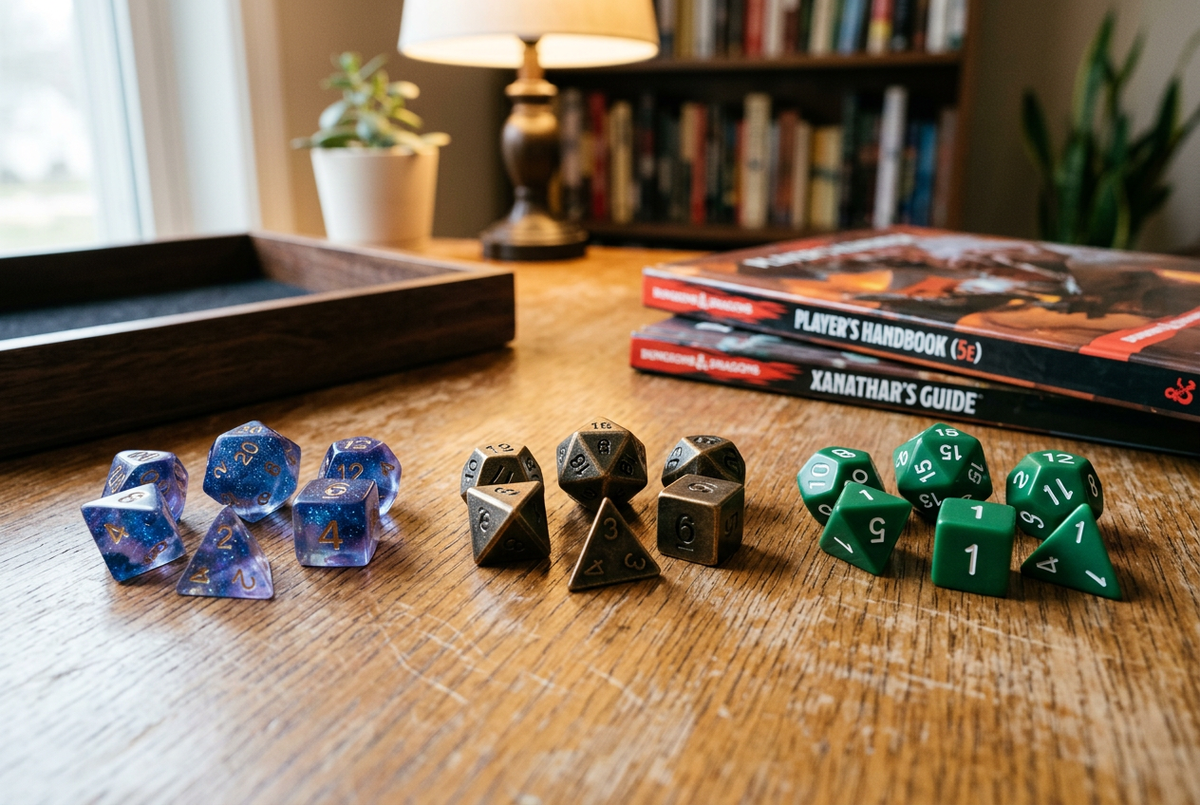

A d100 roll produces a number from 1 to 100. You can make it with one physical hundred-sided die or with two ten-sided dice read together.
That is the key distinction: “roll d100” describes the required result range. It does not automatically mean you need to buy a hundred-sided object.
What Is a Physical D100 Die?
A physical d100 has one hundred numbered faces. Compared with a familiar d20, it has more numbers to inspect and a much more rounded overall shape.

Size matters when choosing one. For example, the black acrylic d100 with blue numbering is listed with a 45 mm diameter and a weight of 60 g. Those are product-specific specifications, not standard measurements for every d100.
Before buying, measure the space in your tray or storage compartment. A container designed around small polyhedral dice may not have room for a larger hundred-sided die.
How Do Percentile Dice Work?
The official D&D Basic Rules describe generating a number from 1 to 100 with two ten-sided dice. One supplies the tens digit and the other supplies the ones digit.
Assign the Digits Before Rolling
A percentile pair commonly has one die marked 00, 10, 20, and so on through 90, plus another marked 0 through 9. Their markings identify their roles.
If you use two ordinary 0–9 d10s, choose which color represents tens before rolling. A red 2 and blue 8 cannot become either 28 or 82 depending on which result you prefer.

Read Zero According to the Percentile Convention
Using the D&D convention, double zero means 100. A zero on only one die does not automatically mean 100.
| Tens die | Ones die | Result |
|---|---|---|
| 40 | 7 | 47 |
| 00 | 8 | 8 |
| 70 | 0 | 70 |
| 90 | 9 | 99 |
| 00 | 0 | 100 |
These readings apply to this percentile convention. A d10 rolled on its own may treat its 0 as 10 instead. The purpose of the roll determines how the marking is read.
Physical D100 or Two D10s?
A Physical D100 Gives You One Object to Read
The appeal is straightforward: roll one die and identify one numbered result. The trade-off is handling a larger object with many small faces.
Let it settle completely on a level surface. If the die is leaning against a tray wall or another object, follow your table’s cocked-die rule rather than choosing the most convenient visible number. Check any reading instructions supplied with the specific product.
A Percentile Pair Uses Familiar-Sized Dice
You may already own the pair in a seven-piece set. It is a compact solution, although you need to read two dice and remember the double-zero convention.
Neither format alone proves better fairness. Claims about accuracy or balance need evidence about the actual product.
Check Readability, Rolling Space, and Storage
When comparing the single d100 collection, look for close-ups showing number contrast and product dimensions. Reflective or transparent finishes can change appearance with the light, so a dramatic product photograph should not be your only reference.
Use a contained rolling area and store the die according to its material and finish. Avoid dropping a larger die into a tightly packed pouch simply because smaller dice fit there.

For another explanation of the smaller-die method, see the existing d10 reading guide.
Frequently Asked Questions
Can I make a percentile roll with one d10?
Yes. Roll once for the tens digit and again for the ones digit, recording their order. Apply the same double-zero convention.
Does a percentile roll always mean lower is better?
No. A game might compare the result against a threshold or use it to select an entry from a table. Follow the instruction that called for the roll.
Should I add the two d10 values?
No. For percentile rolls, the dice supply digits. Adding them produces a different range and distribution.
Choose the Reading Method That Suits You
A physical d100 can be an enjoyable addition, but the percentile pair remains a practical option. Pick a format you can read comfortably, establish the convention before play, and use the rules attached to the roll.